Pecan-Chestnut Lacy Cookies
I love pecans, chestnuts, lace and cookies. These cookies are of my favorite recent recipe creations, with the chestnuts amplifying the nutty flavor and providing a wonderful chewy texture. I made these cookies with smoked salt to evoke "chestnuts roasting on an open fire." They were so delicious I will make chestnut soup and other chestnutty goodies with smoked salt, too.
1 4-ounce stick softened butter (8 tablespoons)
1 cup (I used raw) sugar
1 tablespoon corn syrup
3 egg whites
1 teaspoon cinnamon
5 ounces roasted chestnuts
1/2 teaspoon salt (smoked salt is AMAZING!)
7 to 8 ounces coarsely chopped pecans (about 1 1/2 to 2 cups)
Preheat oven to 325°F. Line large baking sheet with parchment paper or silicone liners. Combine butter, sugar and corn syrup in food processor. Add chestnuts and process until it makes a smooth puree. Then add and pulse nuts until chopped, and add salt; then pulse in egg. Drop some batter by generous tablespoonfuls onto lined baking sheet, spacing 3 inches apart (cookies will spread).
Bake cookies until flattened and golden brown, about 15 minutes. Gently slide parchment paper or silicone with cookies onto rack; cool completely. Transfer cookies to paper towels. Repeat with remaining batter, lining cooled baking sheet again for each batch. (Can be made ahead. Store between sheets of waxed paper in airtight container at room temperature up to 1 week or freeze up to 1 month.)
Wednesday, October 11, 2017


Tuesday, October 03, 2017
Fragrance Reviews
Perfume Intel: Recommendations from the files of a Perfumista
As a perfume lover, I have decided to pay more for a high-quality perfume a bit outside the mainstream, stop the snobbery of only buying expensive well-known perfumes, and seek sites that offer something akin to crowdsourcing worthy perfumes.
The first three are perfumes Fragrantica.com members ranked highly. The last is a sample that I would now burn if it didn't mean releasing even more stink. As Mother's Day, Father's Day, birthdays (hint!), weddings, (and therefore anniversaries, hint #2) approach, consider giving the gift of a glorious perfume. Now, there are those who can't handle scents. Others have lupus, asthma or other conditions that prevent perfume wearing. Some people are averse to the chemicals and even the idea of spritzing. But if you like to use scents, read on!
Note: Blending essential and perfume oils is a major hobby of mine. That is not covered here, but I would love to answer a question about that. I most often buy from From Nature with Love and NOW essential oils and perfume oils.
Aura Essence Rosewater is my most favorite thing. I have multiple bottles and love to chill it in the fridge during warm weather. AHHHHHHH
Élie Saab Le Parfum
(Eau de Parfum) Neoclassical, honeyed orange blossom wafting. Each version grows stronger yet stays itself. If you like the floral components of honey, look no further. Not for someone to young or demure. This smells rich as in Fresh Prince of Bel Air yet natural and all-knowing. Vivian! The first (and only). Best for moms and wedding parties. For the most office friendly, lighter version, try Elie Saab Le Parfum eau de toilette.
Lolita Lempicka Elle L'aime à La Folie
This sweet, floral woodsy delight to me smells like the absence of honey. While I love that elusive honey, it is quite hard to bottle and plays wickedly with skin chemistry. This has the citrus zest but not the orange blossom, the flower but not the nectar, the woods and the sap holding the nest but not the honey, and the warm sunny feeling without the bees buzzing about. It's so versatile and enveloping. It doesn't have a lot of development, but that's fine. I like it from the first spray to the last waft. And it lasts awhile!This is even better than Guerlain's Aqua Allegoria Ylang et Vanille (which I still have) in that it manages to smell like your favorite cousin who makes good life choices instead of your slightly musty auntie with great taste but diminishing olfaction. As if all this weren't enough, the price makes this a no-brainer. Thanks for the helpful reviews, Fragrantica members!
LP No. 9 by Penhaligon
So, I've heard this means Love Potion Number 9. As in the voodoo that you do so well. After the whizzing patchouli, herbs and whatever burned citrus peel calms down this smells like a booty call in the forest. Lady Chatterly's lover en flagrant délit with a squirrel watching. Don't ask me how I know what that smells like. The drydown becomes a pleasing well-blended essential oil-sappy plume that stays close to the skin while exuding sensual heat. If you like a "skin" scent, this is an inventive way to wear it. Stupendous quality for the price. I would be remiss if I didn't mention that it shares some dry herbal undertones with Christian Dior's Dune.
Decadence by Marc Jacobs
If this fragrance is decadence, give me the simple life. This sweet, lingering beast scent reminds me of a prototype: picture a young lady in college who acts dumb as a doornail but is really quite intelligent. She wants to join your study group. She probably takes good notes but has zero insight and is too annoying to bear. So you say "no" but feel bad, until the next time she makes your eyes roll in class. I am no longer a student, but this makes me think back to those days and dilemmas. There are loveable notes that I actually seek in fragrances--orris!--Iris!--jasmine sabac!!!, but every time I feel pity and want to give Decadence another try, it rubs me the wrong way.
Why am I dissing this so hard? It's only perfume, right? Hmph. Yesterday I'd forgotten to wear a fragrance, very unlike me. I was sporting playful yellow with black and teal. I thought about the decanted Decadence sample in my purse and felt sorry for it. Sparingly applied. Fast forward 20 minutes: I'm suffocating from my own fragrance in a meeting, so nauseous I have to abruptly leave. My friends snicker and think I'm pregnant. Ugh! Then I must report to my boss and can't tell her the meeting outcome because of...Decadence!! Shaking my fist! This is banished from my Mount Olympus of fragrances. "Scrubber" never held so much meaning as it did yesterday. And the darn fragrance would not leave. "Out damn spot!" overheard. It was really bad. Do not blind buy or try very far from soap and water. Let my mistake be your lesson. That is all.
Notable mentions: Lolita Lempicka Midnight
This has the licorice tonka bean base notes without the candy fluffy sweetness of the original Lolita Lempicka, now at least 20 years old. I use this to anchor lightweight fruity fragrances like SJP NYC and Body Shop Black Musk.
As a perfume lover, I have decided to pay more for a high-quality perfume a bit outside the mainstream, stop the snobbery of only buying expensive well-known perfumes, and seek sites that offer something akin to crowdsourcing worthy perfumes.
The first three are perfumes Fragrantica.com members ranked highly. The last is a sample that I would now burn if it didn't mean releasing even more stink. As Mother's Day, Father's Day, birthdays (hint!), weddings, (and therefore anniversaries, hint #2) approach, consider giving the gift of a glorious perfume. Now, there are those who can't handle scents. Others have lupus, asthma or other conditions that prevent perfume wearing. Some people are averse to the chemicals and even the idea of spritzing. But if you like to use scents, read on!
Note: Blending essential and perfume oils is a major hobby of mine. That is not covered here, but I would love to answer a question about that. I most often buy from From Nature with Love and NOW essential oils and perfume oils.
Aura Essence Rosewater is my most favorite thing. I have multiple bottles and love to chill it in the fridge during warm weather. AHHHHHHH
Élie Saab Le Parfum
(Eau de Parfum) Neoclassical, honeyed orange blossom wafting. Each version grows stronger yet stays itself. If you like the floral components of honey, look no further. Not for someone to young or demure. This smells rich as in Fresh Prince of Bel Air yet natural and all-knowing. Vivian! The first (and only). Best for moms and wedding parties. For the most office friendly, lighter version, try Elie Saab Le Parfum eau de toilette.
Lolita Lempicka Elle L'aime à La Folie
This sweet, floral woodsy delight to me smells like the absence of honey. While I love that elusive honey, it is quite hard to bottle and plays wickedly with skin chemistry. This has the citrus zest but not the orange blossom, the flower but not the nectar, the woods and the sap holding the nest but not the honey, and the warm sunny feeling without the bees buzzing about. It's so versatile and enveloping. It doesn't have a lot of development, but that's fine. I like it from the first spray to the last waft. And it lasts awhile!This is even better than Guerlain's Aqua Allegoria Ylang et Vanille (which I still have) in that it manages to smell like your favorite cousin who makes good life choices instead of your slightly musty auntie with great taste but diminishing olfaction. As if all this weren't enough, the price makes this a no-brainer. Thanks for the helpful reviews, Fragrantica members!
LP No. 9 by Penhaligon
So, I've heard this means Love Potion Number 9. As in the voodoo that you do so well. After the whizzing patchouli, herbs and whatever burned citrus peel calms down this smells like a booty call in the forest. Lady Chatterly's lover en flagrant délit with a squirrel watching. Don't ask me how I know what that smells like. The drydown becomes a pleasing well-blended essential oil-sappy plume that stays close to the skin while exuding sensual heat. If you like a "skin" scent, this is an inventive way to wear it. Stupendous quality for the price. I would be remiss if I didn't mention that it shares some dry herbal undertones with Christian Dior's Dune.
Decadence by Marc Jacobs
If this fragrance is decadence, give me the simple life. This sweet, lingering beast scent reminds me of a prototype: picture a young lady in college who acts dumb as a doornail but is really quite intelligent. She wants to join your study group. She probably takes good notes but has zero insight and is too annoying to bear. So you say "no" but feel bad, until the next time she makes your eyes roll in class. I am no longer a student, but this makes me think back to those days and dilemmas. There are loveable notes that I actually seek in fragrances--orris!--Iris!--jasmine sabac!!!, but every time I feel pity and want to give Decadence another try, it rubs me the wrong way.
Why am I dissing this so hard? It's only perfume, right? Hmph. Yesterday I'd forgotten to wear a fragrance, very unlike me. I was sporting playful yellow with black and teal. I thought about the decanted Decadence sample in my purse and felt sorry for it. Sparingly applied. Fast forward 20 minutes: I'm suffocating from my own fragrance in a meeting, so nauseous I have to abruptly leave. My friends snicker and think I'm pregnant. Ugh! Then I must report to my boss and can't tell her the meeting outcome because of...Decadence!! Shaking my fist! This is banished from my Mount Olympus of fragrances. "Scrubber" never held so much meaning as it did yesterday. And the darn fragrance would not leave. "Out damn spot!" overheard. It was really bad. Do not blind buy or try very far from soap and water. Let my mistake be your lesson. That is all.
Notable mentions: Lolita Lempicka Midnight
This has the licorice tonka bean base notes without the candy fluffy sweetness of the original Lolita Lempicka, now at least 20 years old. I use this to anchor lightweight fruity fragrances like SJP NYC and Body Shop Black Musk.
Wednesday, February 22, 2017
Paint the town GREEN
 |
| Wikimedia Commons-Greens for Sale by Gideon |
When life gives you lemons, make shandy!
Shandy Town
Ingredients:
12 ounces/360 cl ginger beer or lemonade
12 ounces/360 cl ginger beer or lemonade
12 ounces/360 cl white Belgian beer (Blue Moon is a mass market example)
Twist of lime and orange (orange especially if using Blue Moon-type beer profile)
Directions:
Combine ginger ale/lemonade and beer in a large pitcher over ice. Slice the lime into wedges and serve shandy with a wedge of lime.
For a gluten-free Belgian style beer, try New Planet Blonde
Is that really a thing?
Shrub aka drinking vinegar -it's a thing now. A shrub is a sweetened drinking vinegar that is or will be all the rage. It's tasty and gut friendly. And trending! Why should you believe me? I've been drinking Moscato since 1995!
I highly recommend Elements Grapefruit Vanilla, simply made for elderflower syrup or liqueur à la St. Germain. Elements' lemon mint flavor is a crowd pleaser. Chai pear makes an excellent (excellent excellent) spiced syrup. Sold at Old Line Fine Beer, Wines and Spirits in Beltsville.
Guacamole
As the Queen of Convenience, I suggest, nay, command you to mix cubed ripe avocados with your favorite salsa. 1 large avocado to 1/3 cup salsa should do it. Add a twist of lime or garlic or garlic salt if you care. Done in 5 minutes!
Tuscan Kale Chips My eldest practically begs for these. As the Queen of Convenience, I use a (wheat-free) Italian dressing mix for the salt and seasoning.
Sushi-Roll Rice Salad
Green potato salad
Make your classic or favorite potato salad recipe and add a handful finely chopped fresh parsley.Asparagus: Celebrate Spring with Asparagus! In Germany, Spargelfest is a two-month springtime feast for asparagus. Celebrate the peak of this tasty vegetable right at home. Thanks, Treda, for telling me about this worthwhile celebration.
Asparagus with Prosciutto, Pecorino, and Poached Eggs
Epicurious | May 200732 large asparagus spears (about 3 pounds), trimmed and peeled
8 tablespoons extra-virgin olive oil
8 large eggs
4 teaspoons sea salt
2 teaspoons freshly ground black pepper
8 teaspoons freshly squeezed lemon juice (from 1 medium lemon)
8 thin slices proscuitto (about 4 ounces total)
3 ounces Pecorino or parmesan cheese, finely grated
2 tablespoons fresh flat-leaf parsley, finely chopped
Special equipment: nonstick muffin pan with 12 (1/3-cup) cups
Have ready large bowl ice water. In medium saucepan over high heat, bring salted water to boil. Add asparagus and boil, uncovered, until crisp-tender, 2 to 3 minutes. Drain, then immediately plunge spears into ice water to stop cooking. Drain again and pat dry.
Preheat grill to moderate heat.
Transfer asparagus to large rimmed baking sheet and drizzle with 4 tablespoons olive oil. Toss to coat. Grill, in batches if necessary, until lightly charred, 8 to 10 minutes. Keep warm.
Arrange oven rack in middle position and preheat oven to 400°F. Lightly oil muffin pan.
Crack one egg into each muffin cup (there will be 4 empty cups). Place muffin pan in large roasting pan and add enough hot water to reach halfway up the sides of muffin pan. Bake until eggs are set but yolks are still runny, about 7 to 8 minutes.
While eggs cook, arrange 4 asparagus spears in fan pattern on each of 8 plates. Sprinkle each plate with 1/2 teaspoon salt and 1/4 teaspoon pepper, then drizzle each with 1 teaspoon lemon juice. Drape 1 slice prosciutto atop asparagus on each plate.
Using small offset spatula, carefully remove eggs from pan and place 1 atop each slice prosciutto. Drizzle with remaining 4 tablespoons olive oil and sprinkle with Pecorino
Cook's note: If you prefer, the asparagus can be baked instead of grilled. Skip the boiling step. Drizzle the raw asparagus with oil and bake it at 450°F on a large rimmed baking sheet until tender, about 10 minutes.
Asparagus with Hazelnut Vinaigrette
Serves 6For Vinaigrette
1 large shallot, minced
2 tablespoons Sherry vinegar or red-wine vinegar
1 tablespoon Dijon mustard
1/2 teaspoon sugar
1/3 cup extra-virgin olive oil
1/4 cup hazelnuts, toasted, skinned and chopped
1 hard-cooked large egg
2 pounds asparagus, trimmed and lower 2 inches of stalks peeled
Make vinaigrette:
In a bowl whisk together shallot, vinegar, mustard, sugar and salt and pepper to taste. Add oil in a stream, whisking, and whisk until emulsified. Whisk in hazelnuts.
Finely chop egg. In a deep 10- to 12-inch skillet bring 1 1/2 inches salted water to a boil and cook asparagus over high heat until crisp-tender, about 2 to 4 minutes. Transfer asparagus with tongs to a colander and drain.
Transfer asparagus to a serving dish. Spoon vinaigrette over asparagus and sprinkle with egg. Serve asparagus warm or at room temperature.
Roasted Asparagus with Goat Cheese and Bacon
Serves 6; double or triple the recipe if serving for a crowd.6 bacon slices
2 pounds medium asparagus, tough ends trimmed
2 tablespoons plus 2 teaspoons olive oil
1 3 1/2- to 4-ounce log soft fresh goat cheese, crumbled
2 teaspoons fresh lemon juice
1 teaspoon grated lemon peel
Cook bacon in heavy large skillet over medium heat until brown and crisp. Transfer to paper towels and drain. Crumble bacon; set aside.
Position rack in center of oven and preheat to 500°F. Arrange asparagus on large rimmed baking sheet. Drizzle with 2 tablespoons oil and turn asparagus to coat well. Sprinkle generously with salt and pepper. Roast asparagus until crisp-tender when pierced with knife, about 7 minutes. Arrange asparagus in single layer on platter. Sprinkle with goat cheese, then bacon. Drizzle with lemon juice and remaining 2 teaspoons oil. Sprinkle grated lemon peel over. (Can be prepared 1 hour ahead. Cover with plastic wrap. Let stand at room temperature.)
Mint Sauce for Asparagus
double this for 4-6 people1/2 cup loosely packed fresh mint leaves
1 garlic clove, smashed and peeled
2 tablespoons fat-free chicken broth
2 teaspoons extra-virgin olive oil
1 teaspoon fresh lemon juice
1/4 teaspoon salt
1/8 teaspoon black pepper
 |
| Posted toWikimedia Commons by Nlitement |
Leftover Herbs? Try pesto.
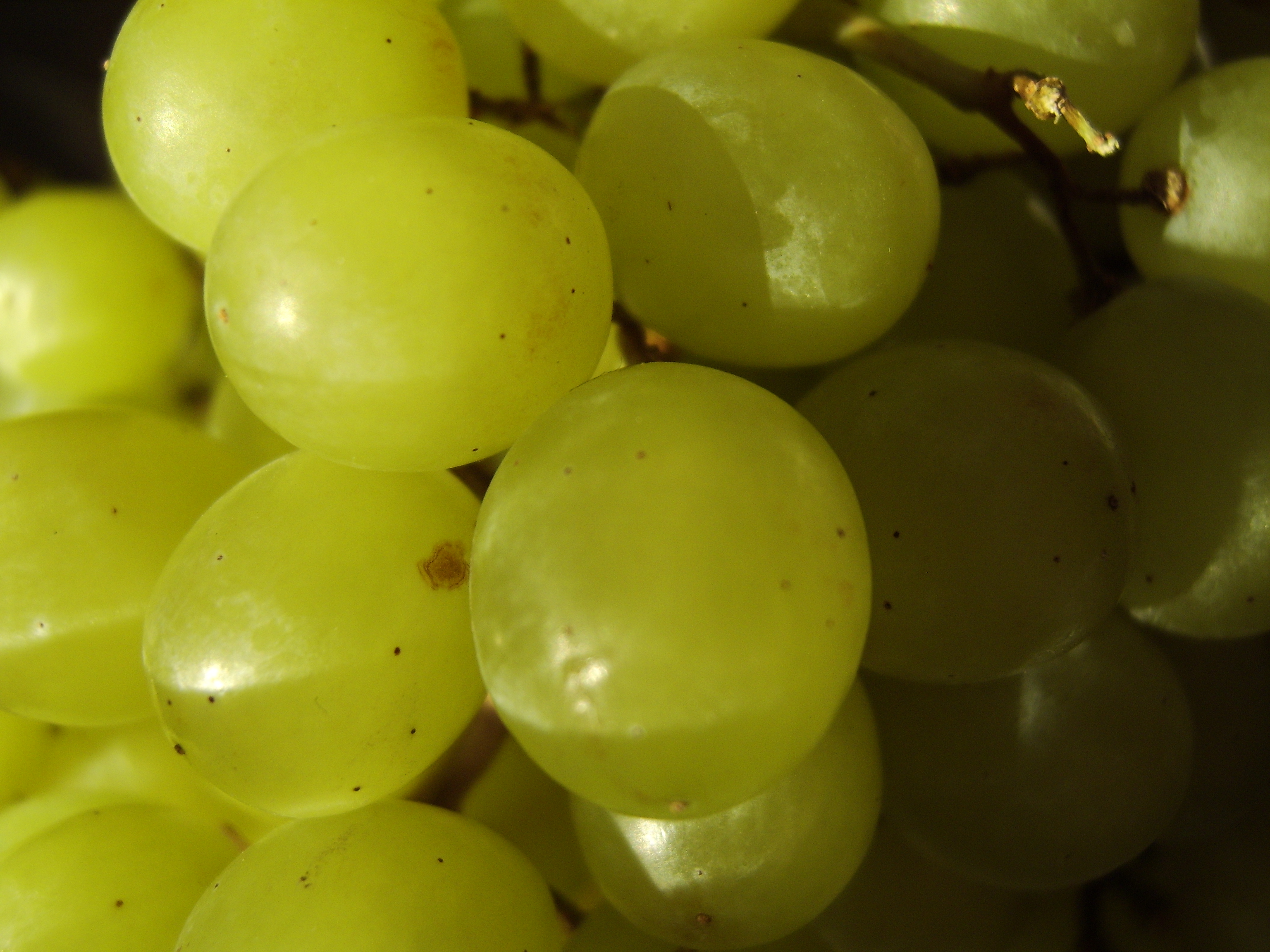
Parsley, mint, basil and cilantro.Frozen green grapes-sometimes easy is best! Freeze individually on a baking sheet. Great for kids old enough to eat grapes. Also makes for delicious edible "ice cubes"!
Green smoothie-- Pineapple-Basil Frosty
One 20-oz can crushed pineapple or one 12-16 oz bag frozen (plus 1/2 cup extra juice)
10 mint leaves or fresh basil leaves
10 mint leaves or fresh basil leaves
Add 10 baby spinach leaves to intensify green color, if preferred2 cups ice (or 1 cup ice + 1/2 cup water if using frozen pineapple)
Blend at high speed until smooth.
Blend at high speed until smooth.
Tuesday, November 22, 2016
Falling Back into Blogging: Thanksgiving Recipes, Rants & Raves
It's been almost a year since I have carved out time to blog. Why? Raising two children is exponentially more time consuming than one, especially in the early years. Work has kept me very busy. Like "what is this elusive do-nothing government employee I keep hearing about?" busy. I come across wonderful recipes, tips, restaurants and ideas, yet time to send them back out has eluded me. Also, many of the cool internet finds go on my Facebook "Smelling and Tasting Life" page. It also occurred to me that our home office/guest bedroom now hosts a child by night, so my evening inspirations were leading me straight to the kitchen. Or I fell asleep when possible!
So, what's new? My wheat allergy continues. That has changed how our family eats. My recipes that used wheat flour are now with premade store-bought mixes, usually from Aldi. Or, sometimes I can use oats, corn flakes or a small amount of corn starch. The other day I used kosher gelatin to thicken my gravy. I mention this because I will often make and take roundabout recipe decisions and food choices that people who can and want to eat wheat would not do. These don't usually translate by weight or measurement to wheat flour or bread crumbs, so make adjustments on your own or use the ideas or recipes and look for tested recipes using wheat flour as guides. This also means that almost any sweet or baked good I consume is coming from home, not the mean wheat-filled streets.
And if all that isn't enough, a disclaimer: I have fully adopted a "cook like a grandma; don't look like a grandma" philosophy. That means I don't measure anything unless it's for some huge, major event or a couple times during the holidays. So, treat my recipes as guideposts and inspirations and consult sources that tend to test well like America's Test Kitchen/Cooks' Illustrated/Cooks' Country, Gourmet (found at epicurious.com), bettycrocker.com (often not my first choice, but they do test recipes).
Pesto-Red AKA sun-dried tomato, and Green AKA basil pesto. These sell for $1.29-$1.69 and are now my base for tomato pasta sauce. I use 1/3 of each pesto along with a large can of crushed tomatoes, a small can of diced tomatoes, and a small can of...
Secret Agent Ingredient: canned carrots
I put canned carrots in smoothies, soups, marinara sauce and stews. They are a great thickener and sneak in veggies when my kids (or I) am picky and peckish. The carrots are 65 cents at Aldi all day every day and also get puréed into carrot ginger soup and even baked goods.
*Fried apples are a seasonal gift from the heavens. Use them. Most importantly stock up! Make a Dutch Baby!!
A pint of heavy cream is $1.69. Just wrap your head around that. It's cheaper than butter. WOW.
Related recipe that sets you back like $1 per person when shopping at Aldi:
"French" Tomato Soup
NOM! We had an inspiration at work. Why should French onion soup have all the fun? What if we started making tomato soup like French onion soup, with the equivalent of an open grilled cheese sandwich on top?? Why haven't we done this before?!?!?! Make some homemade tomato soup (Stewed tomatoes, large 26-ounce can, small handful of washed fresh basil (or a spoonful each of red pesto and green pesto), 1/2 of a 15-ounce can of carrots, a dash of butter or olive oil (if not using pesto). Add 1/2 cup cream and a cup of chicken or vegetable stock. Purée with an immersion blender or in a traditional blender. Top with croutons or potato bread. Then top with sharp Cheddar cheese and broil in the oven until melted and bubbly.
me favorite recipes, musings, and food combinations:
Dutch Baby with *Fried Apples
What is a Dutch Baby? As far as I can tell, it's a lazy-ass crêpe. Instead of painstakingly using this recipe to make wonderful semi-transparent crêpes, dump this mixture over some bubbling hot fried apples from a can, courtesy of Aldi, that you have transferred to your skillet. If your conscience doesn't allow for this "one and done" approach, make sure everyone sees and hears you chopping an apple or two, which will also give everyone more apples and cut down on the overall sugar per serving. Turn down the heat to low and cover about 3-4 minutes, checking until the mixture no longer jiggles. Sprinkle with cinnamon or cinnamon sugar if you did not use the sweet fried apples.
Another Dutch Baby option is to fry some ham or turkey ham, add a generous teaspoon of Dijon mustard to the sizzling ham and dump the batter over that. Turn down the heat to low and cover about 3-4 minutes, checking until the mixture no longer jiggles. Top with Swiss cheese and some cracked black pepper and serve with a salad.
Native American Fry Bread as inspiration
So, it can be rather depressing to be wheat free when you want bread dripping with oil or butter. Funny, when I could eat bread, I didn't often want this. One night I made Aldi's gluten-free pizza dough mix crossed with equal amounts of Aldi's baking mix (about 3 cups total), plus one egg and just under a cup of milk. I fried it in a sauté pan with a healthy dose of coconut oil, flipping it to brown both sides. It was some kind of good!!
To try: Feta-Stuffed Hush Puppies from Cava Mezze
I had (although I wasn't supposed to) some Feta hush puppies at Cava Mezze over a month ago. They were savory, crunchy and had a sweet orange marmalade butter served alongside. I will try this with gluten-free cornbread mix at Aldi and see how it turns out.
(Inspired by Emeril's Cheddar Hush Puppies)
INGREDIENTS
1 1/2 cups yellow cornmeal
1/2 cup bleached all-purpose flour
2 teaspoons salt
1 teaspoon baking powder
1/2 teaspoon baking soda
3 ounces crumbled Feta cheese (about 3/4 cup)
1/4 cup minced yellow onions
1 1/2 teaspoons minced jalapeños
1 1/2 tablespoons hot pepper sauce
2 large eggs
1/2 cup buttermilk
Vegetable oil for deep-frying
DIRECTIONS
-Mix the cornmeal, flour, salt, baking powder, and baking soda in a large mixing bowl.
-Add the cheese, onions, jalapeños, and hot sauce and mix well.
-Add the eggs, buttermilk, and 1/2 cup water. Mix well. If using gluten-free flours, rest batter 10-20 minutes.
-Pour enough oil to come halfway up the sides of a large heavy pot or electric deep fryer and heat over high heat to 360°F. In batches, without crowding, drop tablespoons of the batter into the hot oil.
-Deep-fry on all sides until the hush puppies rise to the surface and are golden brown, 2 to 3 minutes.
-Using a slotted spoon, transfer to paper towels to drain.
--For the butter, mix equal parts orange marmalade and soft butter. Swoon!
Backyard Barbecue Beans From Cook's Country | June/July 2016
My kids and I eat this often on Saturdays after lessons, hopefully before our nap. I use turkey hot dogs instead of bratwurst and usually add--you guessed it--a can of carrots.
SERVES 12 TO 16
Be sure to use a 13 by 9-inch metal baking pan or a roasting pan; the volume of the beans is too great for a 13 by 9-inch ceramic baking dish, and it will overflow. We found that Bush’s Original Recipe Baked Beans are the most consistent product
INGREDIENTS
1/2 cup barbecue sauce
1/2 cup ketchup
1/2 cup water
2 tablespoons spicy brown mustard
2 tablespoons cider vinegar
1 teaspoon liquid smoke
1 teaspoon granulated garlic
1/4 teaspoon cayenne pepper
1 1/4 pounds bratwurst, casings removed (we use 4 to 6 turkey hot dogs, sliced)
2 onions, chopped
2 (28-ounce) cans baked beans
2 (15-ounce) cans pinto beans, drained
2 (15-ounce) cans cannellini beans, drained
1 (10-ounce) can Ro-tel Original Diced Tomatoes & Green Chilies, drained
6 slices thick-cut bacon, cut into 1-inch pieces
INSTRUCTIONS
-Adjust oven rack to middle position and heat oven to 350 degrees. Whisk barbecue sauce, ketchup, water, mustard, vinegar, liquid smoke, granulated garlic, and cayenne together in large bowl; set aside.
-Cook bratwurst in 12-inch nonstick skillet over medium-high heat, breaking up into small pieces with spoon, until fat begins to render, about 5 minutes.
-Transfer bratwurst mixture/hot dogs to bowl with sauce. Stir in baked beans, pinto beans, cannellini beans, and tomatoes. Transfer bean mixture to 13 by 9-inch baking pan and place pan on rimmed baking sheet.
-Arrange bacon pieces in single layer over top of beans. Bake until beans are bubbling and bacon is rendered, about 1½ hours. Let cool for 15 minutes. Serve.
TO MAKE AHEAD: At end of step 3, beans can be wrapped in plastic and refrigerated for up to 24 hours. Proceed with recipe from step 4, increasing baking time to 1¾ hours.
Brownie Fudge Don't Know What This Good Thing Is
Half box (used Aldi gluten-free) brownie mix--1/2 can (14 ounces) sweetened condensed milk--Dash cream--2 handfuls of chopped nuts of your choice--6 ounces (1/2 bag) semisweet chocolate chips. Mix in a glass 8-inch square pan or 9-inch round pie pan. Bake 350 for 30 minutes. OMG!! So good.
Creamy No-Boil Mac 'n' Cheese
This recipe works PERFECTLY with gluten-free pasta. It solves the mushy "this is not really pasta but shaped glue" problem. Plus, it's lazy and tastes great. I plan to coach my oldest to make her mac 'n' cheese this way so she can have another recipe under her belt. This one is great for kids since they won't need to touch a hot stove or hot water to make this.
Teff Carrot Cake with Cream Cheese Frosting
Haven't tried this gluten-free carrot cake yet, but it's on my list to make!! Many mistakes can be masked by delicious frosting, so willing to try.
Sweet Potato Goodness
This sweet potato goodness is so delicious. Add an egg white or a heaping teaspoon ground flaxseed or corn starch instead of flour. I make this in the food processor. Lazy step 1: Bake sweet potatoes for 30 minutes when something else is cooking. Lazy step 2: I blend the peeled sweet potato, spices, salt, candied ginger and cream along with 1/4 cup oats. I then put a little streusel topping on the bottom, add the sweet potato mixture, then add the rest of the oat-coconut topping. Delish!! Even better, it's easy to "veganize" and hard to mess up.
What to do with leftover Turkey? Turkey Nachos
Combine chopped turkey, cranberry sauce, bbq sauce and slow cook on low heat in a pan on the stove for 15 minutes. On a ceramic or glass plate or metal pan, layer tortilla chips, brie or Cheddar cheese, white beans, sour cream. Bake 7 minutes at 375°F. Top with mango or pineapple salsa. You could also make open-face sandwiches with the turkey mixture, cheese and leftover rolls or cornbread.
So, what's new? My wheat allergy continues. That has changed how our family eats. My recipes that used wheat flour are now with premade store-bought mixes, usually from Aldi. Or, sometimes I can use oats, corn flakes or a small amount of corn starch. The other day I used kosher gelatin to thicken my gravy. I mention this because I will often make and take roundabout recipe decisions and food choices that people who can and want to eat wheat would not do. These don't usually translate by weight or measurement to wheat flour or bread crumbs, so make adjustments on your own or use the ideas or recipes and look for tested recipes using wheat flour as guides. This also means that almost any sweet or baked good I consume is coming from home, not the mean wheat-filled streets.
And if all that isn't enough, a disclaimer: I have fully adopted a "cook like a grandma; don't look like a grandma" philosophy. That means I don't measure anything unless it's for some huge, major event or a couple times during the holidays. So, treat my recipes as guideposts and inspirations and consult sources that tend to test well like America's Test Kitchen/Cooks' Illustrated/Cooks' Country, Gourmet (found at epicurious.com), bettycrocker.com (often not my first choice, but they do test recipes).
Still here? Great! So much is going on in our kitchen.
Before I launch into cooking, I need to say this one more time: Aldi is your friend. Anyone out here on the grind knows wages are flat. Adjusted for inflation, they are down. Down, I say! Why do I mention this? Saving money feels best when one doesn't feel it. Aside from my pride being bruised when I realized I was losing cash money by not giving Aldi a chance, I am pain-free. Here is a smattering of my favorite Aldi things:Pesto-Red AKA sun-dried tomato, and Green AKA basil pesto. These sell for $1.29-$1.69 and are now my base for tomato pasta sauce. I use 1/3 of each pesto along with a large can of crushed tomatoes, a small can of diced tomatoes, and a small can of...
Secret Agent Ingredient: canned carrots
I put canned carrots in smoothies, soups, marinara sauce and stews. They are a great thickener and sneak in veggies when my kids (or I) am picky and peckish. The carrots are 65 cents at Aldi all day every day and also get puréed into carrot ginger soup and even baked goods.
*Fried apples are a seasonal gift from the heavens. Use them. Most importantly stock up! Make a Dutch Baby!!
A pint of heavy cream is $1.69. Just wrap your head around that. It's cheaper than butter. WOW.
Related recipe that sets you back like $1 per person when shopping at Aldi:
"French" Tomato Soup
NOM! We had an inspiration at work. Why should French onion soup have all the fun? What if we started making tomato soup like French onion soup, with the equivalent of an open grilled cheese sandwich on top?? Why haven't we done this before?!?!?! Make some homemade tomato soup (Stewed tomatoes, large 26-ounce can, small handful of washed fresh basil (or a spoonful each of red pesto and green pesto), 1/2 of a 15-ounce can of carrots, a dash of butter or olive oil (if not using pesto). Add 1/2 cup cream and a cup of chicken or vegetable stock. Purée with an immersion blender or in a traditional blender. Top with croutons or potato bread. Then top with sharp Cheddar cheese and broil in the oven until melted and bubbly.
me favorite recipes, musings, and food combinations:
Dutch Baby with *Fried Apples
What is a Dutch Baby? As far as I can tell, it's a lazy-ass crêpe. Instead of painstakingly using this recipe to make wonderful semi-transparent crêpes, dump this mixture over some bubbling hot fried apples from a can, courtesy of Aldi, that you have transferred to your skillet. If your conscience doesn't allow for this "one and done" approach, make sure everyone sees and hears you chopping an apple or two, which will also give everyone more apples and cut down on the overall sugar per serving. Turn down the heat to low and cover about 3-4 minutes, checking until the mixture no longer jiggles. Sprinkle with cinnamon or cinnamon sugar if you did not use the sweet fried apples.
Another Dutch Baby option is to fry some ham or turkey ham, add a generous teaspoon of Dijon mustard to the sizzling ham and dump the batter over that. Turn down the heat to low and cover about 3-4 minutes, checking until the mixture no longer jiggles. Top with Swiss cheese and some cracked black pepper and serve with a salad.
Native American Fry Bread as inspiration
So, it can be rather depressing to be wheat free when you want bread dripping with oil or butter. Funny, when I could eat bread, I didn't often want this. One night I made Aldi's gluten-free pizza dough mix crossed with equal amounts of Aldi's baking mix (about 3 cups total), plus one egg and just under a cup of milk. I fried it in a sauté pan with a healthy dose of coconut oil, flipping it to brown both sides. It was some kind of good!!
To try: Feta-Stuffed Hush Puppies from Cava Mezze
I had (although I wasn't supposed to) some Feta hush puppies at Cava Mezze over a month ago. They were savory, crunchy and had a sweet orange marmalade butter served alongside. I will try this with gluten-free cornbread mix at Aldi and see how it turns out.
(Inspired by Emeril's Cheddar Hush Puppies)
INGREDIENTS
1 1/2 cups yellow cornmeal
1/2 cup bleached all-purpose flour
2 teaspoons salt
1 teaspoon baking powder
1/2 teaspoon baking soda
3 ounces crumbled Feta cheese (about 3/4 cup)
1/4 cup minced yellow onions
1 1/2 teaspoons minced jalapeños
1 1/2 tablespoons hot pepper sauce
2 large eggs
1/2 cup buttermilk
Vegetable oil for deep-frying
DIRECTIONS
-Mix the cornmeal, flour, salt, baking powder, and baking soda in a large mixing bowl.
-Add the cheese, onions, jalapeños, and hot sauce and mix well.
-Add the eggs, buttermilk, and 1/2 cup water. Mix well. If using gluten-free flours, rest batter 10-20 minutes.
-Pour enough oil to come halfway up the sides of a large heavy pot or electric deep fryer and heat over high heat to 360°F. In batches, without crowding, drop tablespoons of the batter into the hot oil.
-Deep-fry on all sides until the hush puppies rise to the surface and are golden brown, 2 to 3 minutes.
-Using a slotted spoon, transfer to paper towels to drain.
--For the butter, mix equal parts orange marmalade and soft butter. Swoon!
Backyard Barbecue Beans From Cook's Country | June/July 2016
My kids and I eat this often on Saturdays after lessons, hopefully before our nap. I use turkey hot dogs instead of bratwurst and usually add--you guessed it--a can of carrots.
SERVES 12 TO 16
Be sure to use a 13 by 9-inch metal baking pan or a roasting pan; the volume of the beans is too great for a 13 by 9-inch ceramic baking dish, and it will overflow. We found that Bush’s Original Recipe Baked Beans are the most consistent product
INGREDIENTS
1/2 cup barbecue sauce
1/2 cup ketchup
1/2 cup water
2 tablespoons spicy brown mustard
2 tablespoons cider vinegar
1 teaspoon liquid smoke
1 teaspoon granulated garlic
1/4 teaspoon cayenne pepper
1 1/4 pounds bratwurst, casings removed (we use 4 to 6 turkey hot dogs, sliced)
2 onions, chopped
2 (28-ounce) cans baked beans
2 (15-ounce) cans pinto beans, drained
2 (15-ounce) cans cannellini beans, drained
1 (10-ounce) can Ro-tel Original Diced Tomatoes & Green Chilies, drained
6 slices thick-cut bacon, cut into 1-inch pieces
INSTRUCTIONS
-Adjust oven rack to middle position and heat oven to 350 degrees. Whisk barbecue sauce, ketchup, water, mustard, vinegar, liquid smoke, granulated garlic, and cayenne together in large bowl; set aside.
-Cook bratwurst in 12-inch nonstick skillet over medium-high heat, breaking up into small pieces with spoon, until fat begins to render, about 5 minutes.
-Transfer bratwurst mixture/hot dogs to bowl with sauce. Stir in baked beans, pinto beans, cannellini beans, and tomatoes. Transfer bean mixture to 13 by 9-inch baking pan and place pan on rimmed baking sheet.
-Arrange bacon pieces in single layer over top of beans. Bake until beans are bubbling and bacon is rendered, about 1½ hours. Let cool for 15 minutes. Serve.
TO MAKE AHEAD: At end of step 3, beans can be wrapped in plastic and refrigerated for up to 24 hours. Proceed with recipe from step 4, increasing baking time to 1¾ hours.
Brownie Fudge Don't Know What This Good Thing Is
Half box (used Aldi gluten-free) brownie mix--1/2 can (14 ounces) sweetened condensed milk--Dash cream--2 handfuls of chopped nuts of your choice--6 ounces (1/2 bag) semisweet chocolate chips. Mix in a glass 8-inch square pan or 9-inch round pie pan. Bake 350 for 30 minutes. OMG!! So good.
Thanksgiving Click on "Thanksgiving" to see all prior Smelling and Tasting blog recipes that reference Thanksgiving!
Creamy No-Boil Mac 'n' Cheese
This recipe works PERFECTLY with gluten-free pasta. It solves the mushy "this is not really pasta but shaped glue" problem. Plus, it's lazy and tastes great. I plan to coach my oldest to make her mac 'n' cheese this way so she can have another recipe under her belt. This one is great for kids since they won't need to touch a hot stove or hot water to make this.
Teff Carrot Cake with Cream Cheese Frosting
Haven't tried this gluten-free carrot cake yet, but it's on my list to make!! Many mistakes can be masked by delicious frosting, so willing to try.
Sweet Potato Goodness
This sweet potato goodness is so delicious. Add an egg white or a heaping teaspoon ground flaxseed or corn starch instead of flour. I make this in the food processor. Lazy step 1: Bake sweet potatoes for 30 minutes when something else is cooking. Lazy step 2: I blend the peeled sweet potato, spices, salt, candied ginger and cream along with 1/4 cup oats. I then put a little streusel topping on the bottom, add the sweet potato mixture, then add the rest of the oat-coconut topping. Delish!! Even better, it's easy to "veganize" and hard to mess up.
What to do with leftover Turkey? Turkey Nachos
Combine chopped turkey, cranberry sauce, bbq sauce and slow cook on low heat in a pan on the stove for 15 minutes. On a ceramic or glass plate or metal pan, layer tortilla chips, brie or Cheddar cheese, white beans, sour cream. Bake 7 minutes at 375°F. Top with mango or pineapple salsa. You could also make open-face sandwiches with the turkey mixture, cheese and leftover rolls or cornbread.
Monday, December 07, 2015
Happy Hanukkah: Blueberry Coconut Macaroons
Happy Hanukkah! In honor of my Kosher Dining Hall days, here is an easy, festive Parve dessert!
Blueberry Coconut Macaroons
Prep Time: 15
minutes
Cook Time: 20
minutes
Total Time: 35
minutes
Yield: 24 macaroons
Ingredients
1 12-ounce bag shredded
unsweetened coconut
1 cup granulated sugar
3 large egg whites
1 teaspoon vanilla bean
paste or one teaspoon vanilla extract
1 ounce (or round up to
one package) freeze-dried blueberries from Trader Joe’s or 2 ounces sweetened
dried blueberries
Instructions:
Preheat oven to 350
degrees F. Line a baking sheet with parchment.
In a large bowl, stir
together coconut and sugar. Mix in the egg whites and vanilla.
Mix the blueberries into
the coconut mixture.
Place 1 ½ to 2 inch
mounds of the mixture onto the prepared pan, pressing each together as much as
possible. You do not have to space the cookies far apart, as they will not
spread.
Bake for 15-20 minutes
until golden brown on top and mostly set. Allow to cool completely on pan
before serving or storing. Cookies may be stored in an airtight container at
room temperature for up to 5 days, or frozen, wrapped in parchment and foil and
placed in a zipper bag for up to 3 months. Thaw at room temperature for about
an hour.
Sunday, November 08, 2015
Courtship Lasagne-the way to a love's heart...
Lasagne recipe
I made this often during engagement and the early throes of marriage, along with plump meatballs, West-African chicken stews, homemade salad dressings, inspired punches and brownies with more added ingredients than the original boxed contents.
This can also be adapted for other baked pasta dishes. Mix cooked pasta with cheese mixture and layer in a similar way.

Makes 6-8 very large servings
1/2 kilo or 1 pound ground beef and pinch baking soda or sodium bicarbonate. Do not use baking powder.
2 pinches salt, 1/4 teaspoon
1 tablespoon or 30 ml olive oil, if using lean meat
Thyme, oregano, allspice, black pepper for meat seasoning
3 jars or cans of pasta tomato sauce, 28 ounces or 796 ml each or use cans of crushed tomatoes. Save at least 1/2 can or jar for topping.
2 cloves minced garlic
Leaves from 8 fresh parsley sprigs, finely chopped. Save a little parsley for topping.
2 eggs
2 ricotta cheese containers, totaling about 32 ounces or 950 ml or use 1/2 ricotta and 1/2 cottage cheese
1 bag shredded Parmesan cheese, 200g
2 bags shredded whole milk (if available) mozzarella cheese, 400g. Save 1 packet for layering and for topping.
Fresh pasta sheets, enough for 3 layers, or one dry box lasagne noodles at least 1 pound, 454g. Cook noodles until firm, cool, and set aside in a little cold water.
Directions:
Cook ground meat in a large skillet with oil, if needed, herbs and spices, salt, and a pinch of baking soda to speed up meat browning. Cook until no longer pink and some meat and the pan get crusty brown. Add tomato sauce and set aside.
Next, mix most of parsley, all garlic, both eggs and all cheeses except for 1 packet of mozzarella in a large mixing bowl until well combined.
Set up a station of noodles, meat sauce and cheese mixture.
Layer 1: 1/2 meat sauce
Layer 2: pasta
Layer 3: 1/2 cheese mixture
Layer 4: a small sprinkle mozzarella cheese
Layer 5: pasta
Layer 6: 1/3 meat sauce
Layer 7: 1/2 cheese mixture
Layer 8: a small sprinkle mozzarella cheese
Layer 9: pasta
Next, spread any remaining meat sauce plus tomato sauce on top of pasta. Top with parsley and the rest of mozzarella cheese.
Bake, covered loosely with oiled aluminum foil at 350 degrees for one hour. If your oven runs hot, check after 45 minutes. When done, it should be bubbly and no longer watery. Turn off oven and remove foil. Leave in oven up to fifteen minutes. Then take out of oven and cover loosely with foil again for at least 20 minutes to allow lasagne to cool and set before serving.
Friday, November 06, 2015
She Fan De Be!
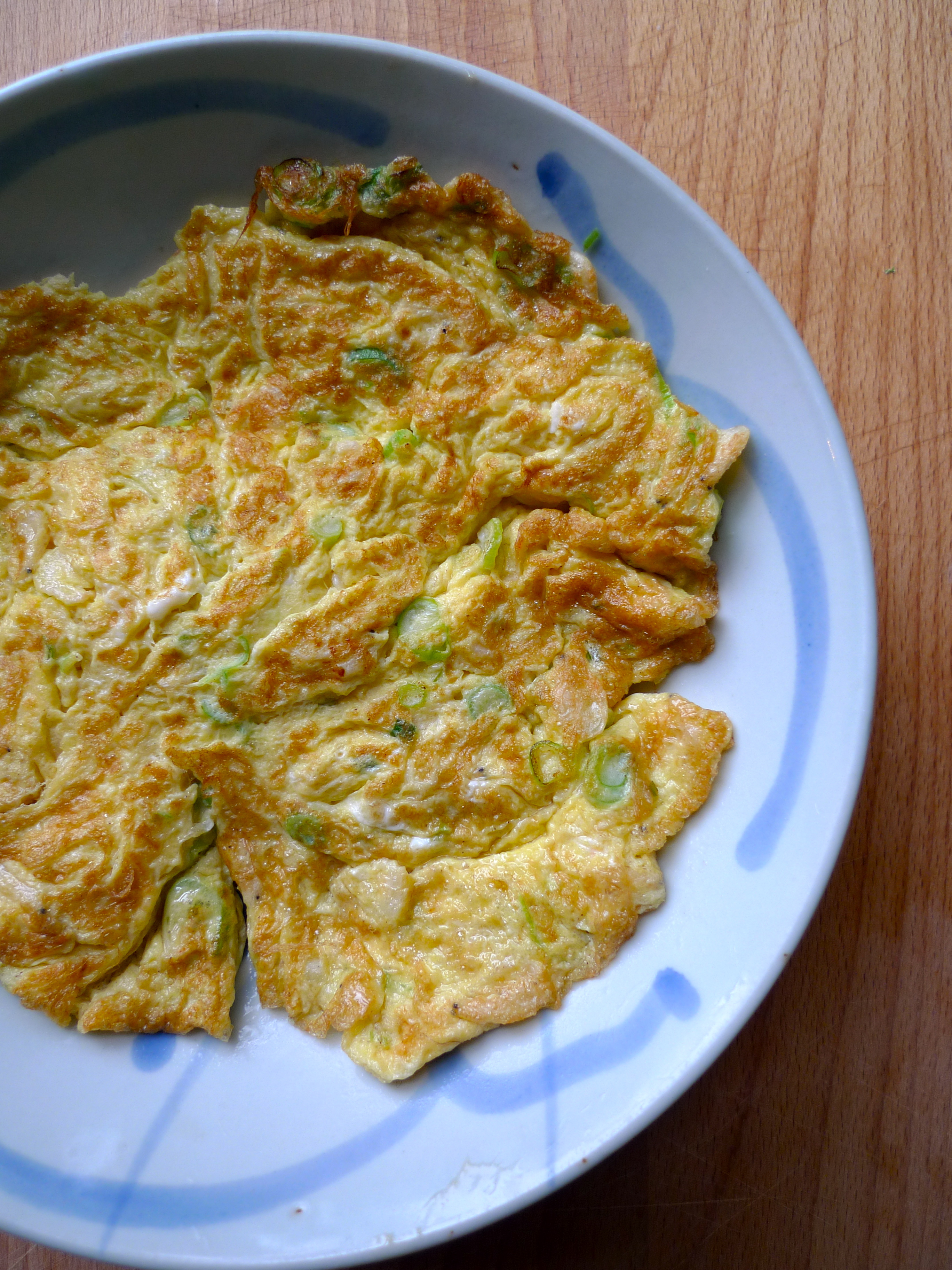
Crispy Fried Omelette: Malian Street food at its' finest!
 |
| Source: FuchsiaDunlop.com |
Who remembers enjoying a greasy, tasty omelette at the shefan tigi's? Here is a guide to prepare your own. Thanks to Anne for the great idea!
Beat 2 large eggs with some finely sliced spring onions or a handful of thinly sliced sweet onions, finely ground pepper and a pinch of salt (or Maggi!) I advocate for smaller omelettes so they will get crispier and cooked faster.
Preheat a heavy pan on medium heat with two tablespoons peanut oil or coconut oil (other oils are less healthy or will be too smoky), ideally 10-inch cast iron skillet or a wok if you have it. Pour well-beaten eggs into the cast-iron skillet or wok, scrambling the egg in the base of the pan until it’s nearly cooked, and then leaving it to turn golden on the base before flipping it over to fry the other side.
Serve with a thin baguette, lavishly spread with Calve or Hellman's mayonnaise.
Subscribe to:
Posts (Atom)